
The Evolution of Henning Brandt: Blind Love's Most Complicated Character

Updated: May 11

Who Is He?
Henning Brandt. Hare Captain in the Goth Regime. Sex addict. Spectrophiliac. Those are some of the descriptions attached to him in the last version of Blind Love.
Out of all the characters in the novel, he remains the most developed and complicated. Henning, who has gone through several iterations over the years, has been with me from the beginning, even before Hans appeared and inspired the Albatross fighter ace, Winter Evremohr.
As the novel evolved, so did Henning, shifting from the protagonist’s lover, to therapist, to captor. He was also inspired by someone I once knew, though not in any intimate sense. It was more like a Jungian nocturnal emission gone wrong, all of our interactions unfolding below the radar. Frustrating as it was, it became a strange sort of game, at least to me, perpetually drawn toward hidden forms of communication, as though I had already been preparing myself for the subtler forms of contact that would later emerge with Hans in 2010.
I never received any real closure from the situation. To counter whatever unrest it left in my psyche, I transformed the person into a character within Blind Love, someone I could interrogate, confront, reshape, and attempt to understand on my own terms. At times the process felt cathartic. Other times it turned silly, even fun. Other times it became heartbreaking.

The Curse of Enhanced Optics
My favorite version of Henning appears in the last draft completed in 2025. In it, he becomes increasingly cruel, especially toward Nyx, the protagonist in the novel’s most recent incarnation, and even more so once she forms a bond with Winter Evremohr, Henning’s best friend. The shift brings out something increasingly antagonistic in him, perhaps rooted in sexual frustration over not having conquered her the way he has the other Valkyries.

Henning, like all Goths, is equipped with enhanced optics capable of seducing Valkyries through direct eye contact, the reason the Valkyries are blindfolded, and why the novel is partly called Blind Love. The encounter functions as a form of sexual coercion since the Valkyries become incapable of refusing once eye contact is made. Yet the enhancement cuts both ways. The Goths, too, become casualties of their own weaponization.
Henning’s wife, Dr. Ursula Meier, known as the Doctor of Enchantment and Medical Overseer of the Valkyrie Initiative, regularly deals with the fallout of Henning’s spur-of-the-moment trysts, which by this stage he has lost the ability to regulate his sexual appetite. But Henning is complicated. Despite his shortcomings, he remains strangely likable and, at times, even relatable in the context of his struggle. Beneath the veneer of privileged authority, he possesses a conscience.
An excerpt from Chapter 6, “Waverly Core Detainment,” offers an early glimpse into Henning’s unraveling, something that only intensifies as the novel progresses. In this scene, the Valkyries are forced to attend a formal dinner inside the prison mansion where they are made to entertain high-ranking Goth officials. While Nyx and Winter continue cultivating their bond, Henning orchestrates an after-dinner orgy. I’ve pieced together portions of the passage here to shorten the reading time.
Waverly Core Detainment: Excerpt from Chapter 6
At the head of the table, Henning observed the gathering. His gaze moved across the Valkyries in sequence, measuring response patterns behind their veiled optics. When he spoke, his cadence remained controlled, each syllable weighted.
“You’ll find,” he said, “that indulgence is not a privilege. It’s a stress test. The question is not whether you can enjoy it, but how much before system failure occurs.”...
The sequence continued without disruption. When Henning stood, his exit marked the next transition. His movements were an extension of his controlled affect.
“Ecstasy awaits outside,” he announced, his tone devoid of excess emotion. His words functioned as both directive and challenge, his phrasing attuned for maximum engagement.

He extended his hand in a formalized invitation, the gesture ceremonial. The Valkyries responded in unison, their exit executed with controlled fluidity. The remaining attendees followed, their vocal outputs subdued yet anticipatory. The procession advanced toward the French doors, the glass reflecting the structured opulence of the environment they were leaving behind.
Henning paused at the threshold. His fingers made contact with the doorframe, a minimal yet intentional movement. This moment was an operational paradox, a relinquishing of structure within a framework designed to enforce it. He both sought and resisted what lay beyond the threshold: dissolution, excess, an engineered oblivion.

Henning stepped into the courtyard, the drop in temperature registering as a sharp contrast against the residual warmth of Waverly…
Articles of clothing were removed with methodical detachment. Silk, leather, and lace accumulating at their feet, stripped away without hesitation. The group dissolved into an organic network of movement, bodies aligning in synchronized engagement, whispers exchanged in fragmented sequences. Henning moved through the shifting mass, his touch registering across exposed skin, his verbal outputs modulated to sustain momentum. His participation remained functional, serving to facilitate and indulge.
The ecstasy he engineered was quantifiable, a controlled release of sensory input, a short-term override of internal regulation. Yet beneath the engagement, he remained displaced, a system observer rather than a fully engaged participant. The event played out as expected, its structure predictable, its aftermath inevitable. As the night progressed, the outcome remained unchanged: temporary satiation followed by depletion, indulgence culminating in the return of absence (Stuart, 2025, pp. 71 -- 73).
Dr. Silverton: Surfer Turned Psychiatrist
While sifting through drawings of Henning, I came across an earlier version of Blind Love that I had approached as an epistolary novel written in first person and still grounded in this reality, unlike the latest version (2025), which unfolds within a dystopian sci-fi world where Nazism has resurfaced in a post-apocalyptic world. I hadn’t read the excerpt below in more than a decade and, to my surprise, I like it.
In this earlier version from December 29, 2016, Nyx is called Eliot. She is in late adolescence, struggling with paranormal activity in her house while trying to cope with the death of her foster mother, Alma, who adopted her after her biological mother died from a drug overdose. The story unfolds through journal entries, set during the late 1980s and early 1990s in Winter Park, an affluent community in Central Florida. In one of the entries below, Eliot documents a therapy session with Dr. Silverton, an earlier iteration of Henning. She has recently experienced a paranormal or poltergeist event.
Das Boot refers both to her Buick station wagon and to the German film of the same name. The lyrics quoted at the end come from “Suffer Little Children” by The Smiths, one of my all-time favorite bands.
Sunday 10.29.89
Ten days since the apple tower incident. Alma would’ve said, “Fantasmas vienen y van cuando quieren.”
The genie only stays in the bottle because he doesn’t feel like coming out.
Monday 10.30.89
The more I think, the more disturbing everything becomes. Silverton says processing is essential to recovery. But overprocessing is something else entirely. While I’m in the middle of a traumatic or frightening experience, especially when the meds aren’t dulling everything out, survival mode kicks in. It’s the aftermath that drives me crazy, the endless loop that plays in the brain, trying to solve the unsolvable on repeat. That’s where I’m at now, replaying what happened after I got home from work tonight.
Work had drained me, which is probably why I barely reacted to finding three glass paperweights sitting on the entryway table. They had been moved from the library. I understood that much, but couldn’t summon enough concern to care. I only wanted to put them back where they belonged. But when I reached for the paperweight with the prideful red center, it jerked away from my hand with a deliberate movement that made it seem alive. Seeing this heavy little object pull away jolted me awake.
I reached for it again, then grabbed the other two paperweights and returned all three to the bookshelf where they had always sat as ornaments, a clustered trinity beside the brass bookend holding travel guides and city maps.
“Es un espíritu que no quiere ir,” Alma would've said.
This is an unseen troublemaker of a house no longer blessed. Its occupant crammed with junk, which is probably why the ghost is here now. I have a junk soul.
Tuesday, 10.31.89
It’s a dark Samhain night, the new moon blacking out the sky. I’m skipping the widdershins and deosils tonight. Too on edge for casting circles and working with Elementals. Besides, every day is Halloween in Gothsville.
I started my day devouring a breakfast sandwich on the way to see Silverton, zigzagging das Boot down Fairbanks like a UPS truck on a tight schedule.
He asked before I had a chance to sit down what had happened on the 19th that made me call him.
I dropped onto the springy couch upholstered in hunter-green corduroy. I made him promise not to psychobabble anything that could be filed away in that diagnostic bible he keeps on his desk, a constant reminder that no one is safe from being pathologized.
He crossed his heart and hoped to die, then looked away just long enough to grab a pen and my file.
“No,” I said. “This doesn’t go in my permanent record.”

His eyes were back on me, intent and curious in his forty-year-old, surfer-turned-psychiatrist way. It was easy to tell from the broad shoulders and blond wind-swept hair that his pinnacle had been about twenty years earlier, back when he bench-pressed Gidgets on the shores of Mavericks after charging waves on his longboard.
He folded in on himself, one arm across his waist, his hand covering his mouth as he measured his next move. “So,” he said, “an earthbound came to you the day you called me.”
I nodded and gave him the specifics, every occurrence so far, even though I knew better.
“Were you able to get rid of it?” he asked, feigning interest while mentally cycling through a long list of disorders.
“I’m not sure I know how.” I watched a cluster of clouds swallow the sun and drain the light out of everything.
Silverton reclined in his chair and stretched out his lean legs. “Never a dull moment,” he said with a delivery that reduced my account to the expected theatrics of a girl who could’ve stood in for a poor man’s version of Winona Ryder in Beetlejuice. I should already be talking to the dead.
My agitation loomed like a sharpened spindle poised to twist into his heart.
“Have you started journaling yet?” He switched gears, choosing avoidance over confrontation on a day when hexes were in high demand.

The sun returned with reprisal, illuminating everything that sucks about living here. Outside the windows sat a landscape of revolving billboards, one escape after another advertised to the vast network of highways slicing through a tropical paradise.
“Tell me what you’re thinking,” he said with two minutes of talk time left.
“'Fresh lilaced moorland fields cannot hide the stolid stench of death.'”
“I don’t follow.”
Lyrics were all I could give him. I had caught him breaking confidentiality once. I overheard him telling his Hawaiian Tropic, sun-kissed wife about me, the nineteen-year-old girl with a boy’s name because her mom wanted a son.
“Her mother was a junkie,” Silverton said. “Got herself killed.” He aired out the dirty laundry of my fun-packed misadventures. “Corporate Alma, the part-time bruja rescued her from the system, then got struck down by a bolt of bad luck. The girl’s cursed. I should refer her to someone else.”
He had forgotten to turn on the white-noise machine when I arrived fifteen minutes early for our session (Stuart, 2015, pp. 5 -- 6).
Spectrophilic Henning: If I'm Fucking a Ghost, Then So Must He
The man who inspired the Henning character witnessed the strange turn my life took after Hans appeared. The world I had trusted up to that point began to collapse as I encountered experiences I could no longer explain through my previous understanding of reality. He witnessed my confusion as I struggled to make sense of what Hans was revealing. In hindsight, it must have seemed unhinged to him.
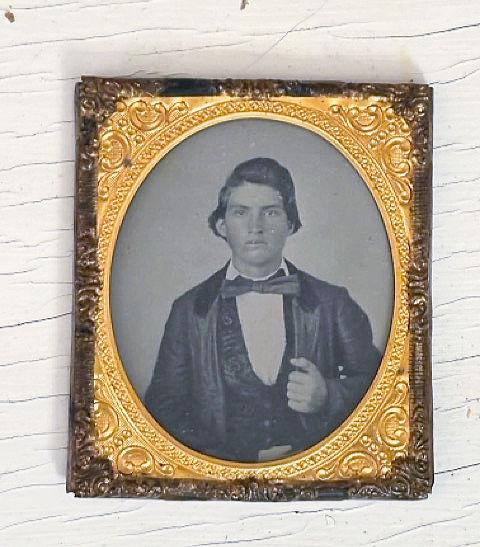
That is how things ended between us, with the beginning of a haunted story that carried me elsewhere, because once something like that enters your life, there is no going back to who you were before. The world you knew no longer holds together in quite the same way. I sometimes wonder if he could ever understand that.
At least in Blind Love, Henning would eventually come to understand what that was like once he realized the spirit Wilhelmine Hartgård was his true love. In this scene from Chapter 15, Undeterred, he is becoming increasingly dependent on his sexual encounters with Wilhelmine.
Undeterred: Excerpt from Chapter 15

Henning had yet to determine the full extent of Wilhelmine’s fixation. This was not a singular paranormal event but an enforced recurrence. He was not an incidental observer. He was Anders, the reincarnated counterpart of her former bond. Their entanglement followed a pre-existing cycle, predetermined by a binding directive enacted by a wandering djinn. The sequence had already been set, an engineered variance designed for disruption.
Wilhelmine, however, withheld critical data. Her communication filtered through layers of abstraction and controlled ambiguity. Physical contact was sufficient to maintain engagement but never enough to provide full sensory resolution. She understood the mechanics of restraint, the strategic advantage of sustaining Henning in a perpetual state of pursuit. Full disclosure carried inherent risk. If he ever achieved full awareness of their connection, the intricate framework of influence she had established would destabilize.
Sex with spirits, particularly with Wilhelmine, introduced a high-risk dependency. The experience bypassed conventional sensory processing, directly interfacing with neurological pathways, embedding itself beyond the limitations of flesh. The feedback loop was unregulated. The pleasure and torment were interwoven at intensities no mortal interaction could replicate. Each engagement extended beyond temporal constraints, inducing a state of perceived timelessness, every stimulus heightened to an unsustainable threshold. This was an act of consumption. The effect was cumulative, amplifying Henning’s pre-existing compulsions, recalibrating his baseline urges into something far more volatile and insatiable. It was an escalating demand with no identifiable saturation point.
And yet, Wilhelmine never fully revealed herself. She allowed only fragments to surface, sustaining Henning’s fixation while maintaining a barrier of controlled distance. His need kept him ensnared, his pursuit self-perpetuating, while she remained shielded behind centuries of concealed knowledge.
Henning had rationalized his current operations at the Hartgård Estate under the classification of an essential mental health expedition, a designation that provided both cover and opportunity. The arrangement allowed him to bring several Valkyries under the pretense of necessity, their presence serving as both logistical support and strategic misdirection. His detachment granted him unrestricted movement, ensuring minimal oversight (Stuart, 2025, pp. 311 -- 312).
References
Stuart, L. (2015). Blind love. Unpublished manuscript.
Stuart, L. (2025). Blind love. Unpublished manuscript.
Comments